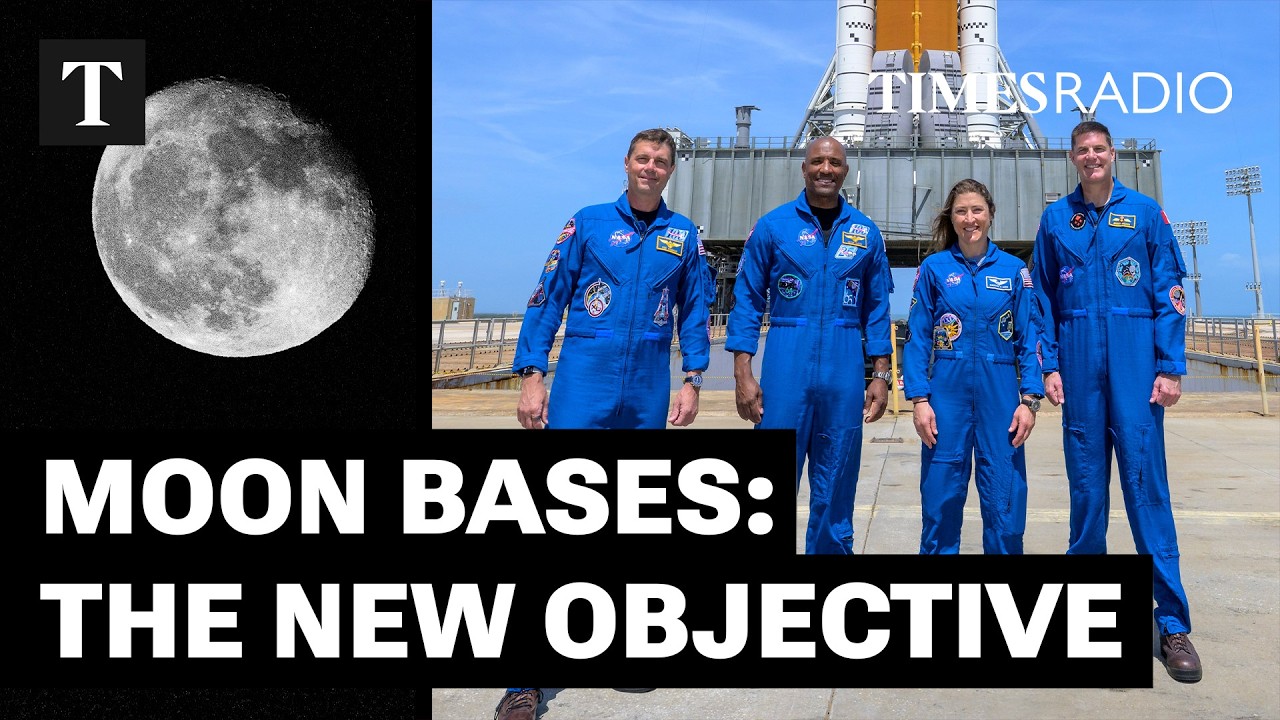
In a groundbreaking achievement, the Artemis II mission has shattered the record for the farthest distance humans have ever traveled from Earth, reaching 252,755 miles as the crew orbits the moon and sets sights on future exploration. Amid emotional highs, astronauts honored predecessors and named a crater for a fallen loved one, while plans for permanent moon bases accelerate, marking the dawn of a new era in space travel.
This historic moment unfolded as the Artemis II team, aboard their capsule, surpassed the 1970 Apollo 13 milestone, pushing humanity deeper into the cosmos than ever before. Commander Reid Wiseman and his crewmates expressed profound gratitude, dedicating their feat to the pioneers who paved the way. “We do so in honoring the extraordinary efforts of our predecessors,“ Wiseman said, his voice thick with emotion from the capsule’s cabin.
The crew’s journey included a poignant tribute, naming a newly identified crater “Carol“ after Wiseman’s late wife. Crewmate Jeremy Hansen described it as a bright spot near the moon’s near-far side boundary, visible from Earth at certain times. “It’s especially meaningful for this crew,“ Hansen noted, reflecting on their shared loss and the bond that unites them. This act symbolized not just remembrance, but the human spirit’s resilience in the face of exploration’s risks.
Experts are buzzing with excitement over the mission’s implications. Megan Christian, a reserve astronaut and senior exploration manager at the UK Space Agency, called it “the start of a new era.“ She emphasized that Artemis II isn’t just a flyby; it’s a blueprint for sustained lunar presence. “We’re going back to the moon to stay, and then on to Mars,“ Christian said, highlighting the transition from mere visits to establishing bases.
As the astronauts completed their lunar flyby, they witnessed breathtaking sights, including areas of the moon’s far side never seen by human eyes. The crew broke down in tears upon hitting the record distance, a raw display of the emotional toll and triumph. Kevin Fong, a professor of public engagement in science at University College London and former NASA collaborator, described the mission as “incredible beyond expectation.“ He pointed out the sheer complexity: launching a capsule with the power of a nuclear weapon and navigating it safely around the moon.
Fong warned that the journey home won’t be straightforward. “The two hardest parts are starting and stopping,“ he explained, referring to the perilous re-entry at over 20,000 miles per hour. The crew must endure intense heat on the capsule’s shield, testing emergency procedures during their four-day return. Despite the risks, the focus remains on learning and advancing, with Artemis II serving as a critical test flight.
Back on Earth, the reaction has been one of awe and urgency. Families, including Wiseman’s daughters who watched from mission control, shared in the emotional highs. This mission isn’t just about records; it’s a call to action. The astronauts challenged future generations: “Make sure this record is not long-lived,“ urging accelerated efforts in space exploration. With Artemis II nearing completion, the stage is set for bolder endeavors.
The broader context reveals a global collaboration, involving hundreds of thousands of scientists and engineers. This teamwork, built on lessons from past programs like Apollo and the Space Shuttle, underscores the mission’s success. Now, as the crew heads home, attention shifts to the next phases: landing on the moon and building sustainable bases. These outposts will enable long-term research, resource extraction, and eventually, missions to Mars.
The urgency of this development cannot be overstated. Climate change and technological competition demand that humanity expands beyond Earth. Artemis II’s achievements signal that we’re on the cusp of making that leap. Experts like Christian and Fong agree that the emotional and scientific insights from this mission will fuel innovation, ensuring we don’t rest on these laurels.
As the capsule hurtles back, the world watches with bated breath. The astronauts, having glimpsed the unknown, now carry the weight of inspiration. Their experiences—breaking records, naming craters, and envisioning the future—highlight the human element in space travel. This isn’t the end; it’s the beginning of an ambitious plan to colonize the moon and beyond.
In interviews, the crew emphasized preparation and camaraderie. “They’ll need to work through emotions together,“ Christian noted, as the team processes their historic flyby. Fong added that the mission’s success stems from decades of accumulated knowledge, now propelling us forward. With splashdown imminent, the focus intensifies on what comes next: establishing lunar bases that could house crews for extended periods.
These bases represent a paradigm shift, turning the moon into a launchpad for deeper space ventures. The Artemis program aims to create habitats, extract water from lunar ice, and conduct experiments that prepare for Mars colonization. The crew’s challenge echoes globally: innovate, explore, and ensure this record falls quickly. As Artemis II concludes, the race to the stars accelerates with unprecedented momentum.
The emotional core of the mission resonates deeply. Hearing the astronauts’ voices crack with pride and vulnerability reminds us of the personal stakes. Wiseman’s tribute to his wife Carol adds a layer of humanity to the technical feats, making this story not just about science, but about people pushing boundaries. In a world facing uncertainties, Artemis II offers a beacon of hope and progress.
Now, as the four-day journey home unfolds, mission control monitors every detail. The crew will continue testing systems, ensuring the capsule’s integrity for future flights. This phase is crucial, as it validates the technology needed for sustained lunar operations. Experts predict that by the decade’s end, we’ll see humans living on the moon, a direct result of missions like this one.
The global implications are vast. Nations are collaborating more than ever, with partnerships between NASA, the UK Space Agency, and others driving the agenda. This unity is key to overcoming challenges, from radiation exposure to life support systems. Artemis II’s success amplifies the call for investment in space, positioning it as a priority for international security and scientific advancement.
In closing, as the Artemis II crew nears Earth, their legacy is already unfolding. The plan for moon bases is no longer a distant dream; it’s imminent. This breaking news story captures a pivotal moment in history, where humanity’s reach extends further, fueled by emotion, innovation, and unyielding determination. The future of space exploration has never been brighter.