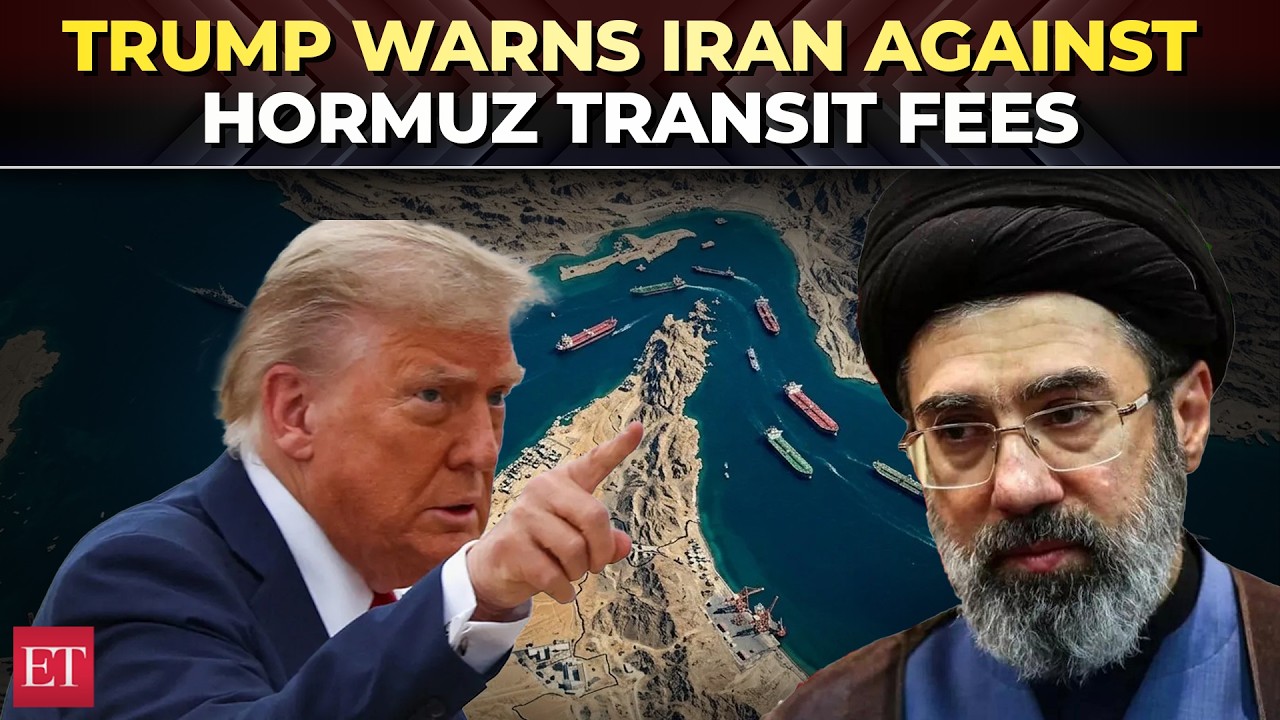
In a bold escalation of international tensions, US President Donald Trump has issued a direct warning to Iran, demanding it halt any attempts to charge fees for ships passing through the Strait of Hormuz immediately. “They better not be, and if they are, they better stop now,“ Trump declared on Truth Social, underscoring violations of established agreements amid global economic strain. This fiery statement comes as Iran’s actions threaten vital shipping routes, potentially sparking wider conflict in the Middle East.
The Strait of Hormuz, a critical chokepoint for global oil flows, has become a flashpoint in escalating disputes. Trump’s remarks highlight Iran’s alleged imposition of tolls, which he claims disrupts international trade and breaches longstanding maritime laws. Speaking from the White House, Trump’s team emphasized close monitoring, with officials stating the US stands ready to assist in enforcing free navigation. The president’s stance reflects growing frustration over Iran’s role in regional instability.
Iran’s moves have drawn sharp condemnation from world leaders, including Britain’s Prime Minister, who convened a coalition of nations to address the crisis. The Strait serves as a lifeline for energy exports from countries like Saudi Arabia and Qatar, and any restrictions could cripple global supply chains. Trump’s Truth Social posts add urgency, warning that such actions are “a very poor job“ and must cease at once to avoid severe repercussions.
As the situation unfolds, the US has pledged to work with allies to ensure the Strait reopens fully. Officials reiterated that no nation can unilaterally control these waters, echoing principles of the law of the sea. The potential for economic fallout is immense, with experts warning of skyrocketing oil prices and disruptions to fertilizers, natural gas, and jet fuel supplies worldwide. Trump’s intervention signals a zero-tolerance approach to threats against international commerce.
In the broader context, this standoff is part of a pattern of volatility in the Middle East. Iran’s actions, including alleged support for proxies like Hezbollah, have fueled conflicts that extend beyond the Strait. The UK, with its deep maritime heritage, has taken a leading role, urging immediate action to protect seafarers and restore trade routes. Nearly 20,000 crew members remain stranded, turning this into a humanitarian crisis as well.
Trump’s comments come amid ceasefire negotiations, where the reopening of the Strait is a key condition. He has even floated the idea of US involvement in managing the waterway, potentially through joint ventures to prevent future abuses. However, the immediate priority, as stated by US officials, is unconditional access without tolls or restrictions. This development underscores the intricate web of alliances and rivalries shaping global security.
The global economy hangs in the balance, with attacks on shipping already causing widespread damage. Countries like Bahrain, Kuwait, and Oman rely on these routes, and Iran’s tactics are seen as an attempt to hold the world hostage. Trump’s warning injects fresh urgency, reminding all parties of the high stakes involved. As tensions simmer, the international community watches closely for Iran’s next move.
In parallel, efforts to build a sustainable peace in the region include addressing conflicts in Lebanon and Gaza. The UK’s Prime Minister stressed that regional stability demands an end to Iran’s threats, including its nuclear ambitions and support for militant groups. This multifaceted crisis reveals how interconnected security and prosperity have become in an era of chronic instability.
Trump’s assertive rhetoric echoes his administration’s hardline policy toward Iran, dating back to his presidency. By leveraging social media, he amplifies the message to a global audience, emphasizing that freedom of navigation is non-negotiable. Allies are rallying, with over 40 nations backing initiatives to safeguard the seas, as outlined in recent international forums.
The human cost of this standoff is profound. Stranded ships carry essential goods, from food imports to energy resources, affecting millions. Britain’s historical commitment to maritime freedoms drives its proactive stance, with leaders pushing for practical steps like evacuating seafarers. Trump’s call to action could pivot the narrative toward de-escalation or deeper confrontation.
As the world grapples with this threat, the US remains vigilant, coordinating with partners to monitor developments. Iran’s potential response looms large, with experts warning of ripple effects on energy markets and geopolitical alliances. Trump’s unyielding tone sets the stage for a critical juncture in international relations.
This incident is not isolated; it follows a series of global shocks, from the COVID pandemic to conflicts in Ukraine. Each event has 𝓮𝔁𝓹𝓸𝓼𝓮𝓭 vulnerabilities in the global order, prompting a reevaluation of security assumptions. Trump’s intervention highlights the need for adaptive strategies to counter emerging threats.
In the face of rising protectionism and technological shifts, nations must unite to defend shared interests. The Strait of Hormuz exemplifies the fragility of global trade, where any disruption can cascade into widespread turmoil. Trump’s warning serves as a rallying cry for collective action.
Officials in Washington are preparing contingency plans, including potential sanctions or naval deployments, to enforce compliance. The president’s statements have already influenced market sentiments, with oil prices fluctuating amid the uncertainty. This fast-moving situation demands unwavering attention from world leaders.
Iran’s regime, known for its repressive tactics, faces increasing isolation as allies distance themselves. The international consensus, bolstered by Britain’s efforts, reinforces that no single nation can dictate terms on the high seas. Trump’s direct challenge could mark a turning point in curbing Iran’s influence.
As negotiations continue, the focus remains on restoring normalcy to the Strait. The path forward involves diplomacy, enforcement, and a commitment to the principles that underpin global trade. Trump’s bold stance amplifies the urgency, urging swift resolution to avert catastrophe.
In closing, this breaking development underscores the precarious balance of power in the Middle East. With Trump’s warning echoing across platforms, the world awaits Iran’s response, hoping for de-escalation before tensions boil over. The stakes are too high for delay, as the global economy and regional stability hang in the balance.