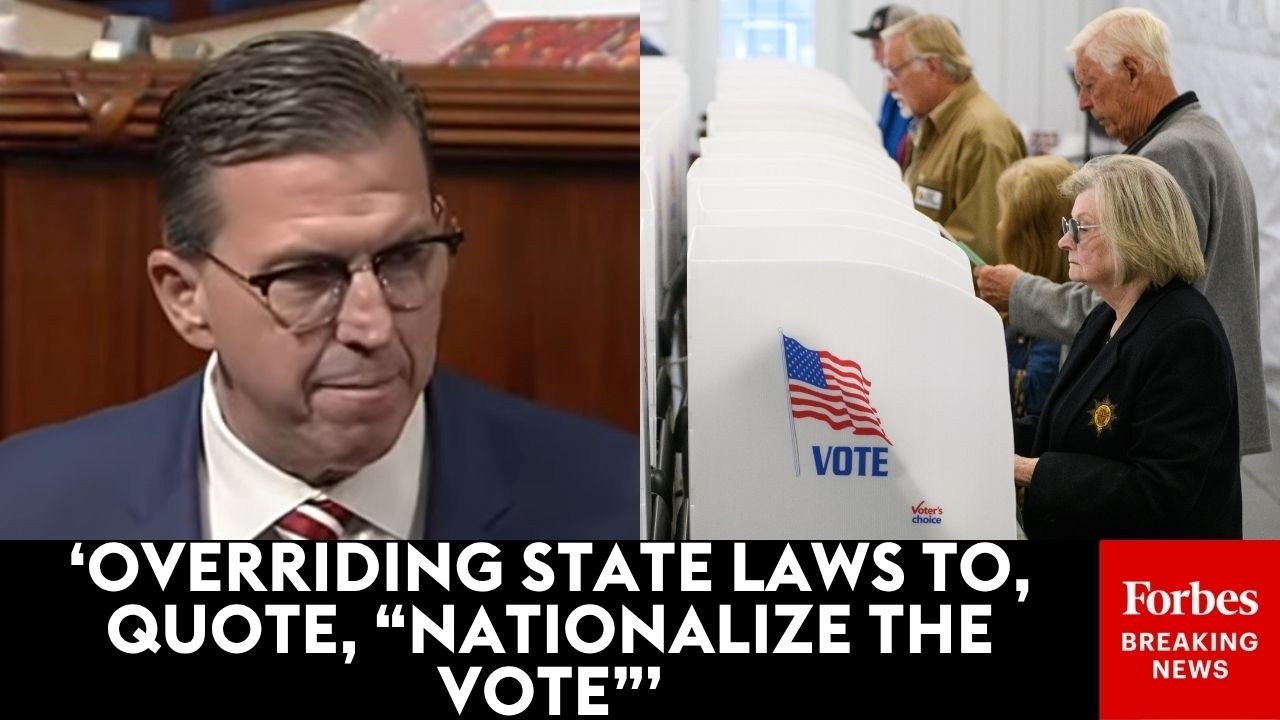
In a fiery address on the House floor, Representative Kevin Mullin has accused the Republican Party of deliberately obstructing voter rights through the SAVE America Act, labeling it a blatant effort to silence the electorate and erode democratic principles amid rising political tensions.
Mullin’s remarks come at a pivotal moment in American politics, where the integrity of elections is under intense scrutiny. He invoked the nation’s 250-year legacy, reminding colleagues that democracy thrives on debate and voting, not suppression. Drawing from history, Mullin criticized the GOP’s shift from states’ rights advocates to enforcers of federal overreach, all under the influence of their leader.
The congressman specifically targeted the SAVE Act and the MEGA Act as tools designed to complicate voting access. He pointed to unfounded claims of voter fraud as a pretext for restrictive measures, including attempts to ban mail-in ballots. Mullin’s words painted a picture of a party increasingly out of touch, willing to manipulate rules to maintain power rather than earn it through fair elections.
This isn’t just rhetoric; Mullin referenced real actions, such as the Trump-era Department of Justice raid on a Georgia election office and efforts to seize ballots. He highlighted how these moves echo a broader pattern of election denialism, where results are only accepted if they favor one side. The speech underscored the chaos of January 6, when an angry mob stormed the Capitol to overturn a legitimate outcome.
Mullin urged his colleagues to reflect on their duty, emphasizing that America’s decentralized election system—designed by the framers to withstand tyranny—must be protected. He argued that voters cast ballots in everyday places like schools and churches, a process that’s inherently secure and resistant to centralized control. Even the former president himself voted by mail, Mullin noted, exposing the hypocrisy.
The accusations extend beyond policy, touching on the GOP’s alleged embrace of extremism. Mullin decried attempts to extort states for voter data and calls for federal agents at polling sites, framing these as direct threats to the peaceful transfer of power. His speech resonated with a sense of urgency, warning that such tactics could fracture the nation’s foundational experiment in self-governance.
In a particularly poignant segment, Mullin addressed his Republican peers directly, suggesting many privately feel ashamed of their party’s direction. He linked this to broader discontent among Americans, who are grappling with economic hardships, botched immigration policies, and images of federal overreach. Yet, the focus remains on personal vendettas rather than solutions, he charged.
Mullin’s critique didn’t stop at elections; he tied the GOP’s actions to a larger erosion of public trust. With inflation soaring and social divisions deepening, he argued that resorting to voter suppression is a desperate bid to cling to power. This approach, he warned, is unsustainable and increasingly repellent to the electorate.
The speech highlighted how the American people hold the ultimate authority, capable of seeing through these maneuvers. Mullin called for unity in defending elections, insisting that Congress must certify winners regardless of party affiliation. His closing plea was for courage among lawmakers, stressing that the fate of democracy hangs in the balance.
As debates intensify ahead of key votes, Mullin’s words are fueling a national conversation about voting rights. Experts warn that such legislation could disenfranchise millions, particularly in marginalized communities. The urgency in his delivery amplified the stakes, turning a routine floor speech into a rallying cry for democratic safeguards.
This breaking development underscores the fragile state of U.S. institutions, with Mullin’s accusations echoing concerns raised by civil rights groups. They argue that the SAVE Act represents a regression, potentially leading to longer lines, stricter ID requirements, and barriers for absentee voters. The implications could reshape future elections, making every ballot a battleground.
Mullin’s reference to historical parallels drew sharp attention, comparing current events to past threats against democracy. He reminded listeners that the Constitution was crafted to prevent any single figure from dominating the process, a safeguard now being tested. His speech, delivered with palpable emotion, left little doubt about the gravity of the moment.
In the wake of his remarks, reactions are pouring in from both sides of the aisle. While Democrats are amplifying Mullin’s message as a call to action, some Republicans have dismissed it as partisan hyperbole. Yet, the underlying issues—voter access, election security, and political accountability—remain at the forefront of public discourse.
As the nation hurtles toward another contentious election cycle, Mullin’s speech serves as a stark reminder of what’s at risk. With trust in government waning, protecting the vote becomes not just a policy debate but a moral imperative. His words challenge all Americans to demand transparency and fairness in their democratic processes.
The broader context reveals a polarized landscape, where 𝒶𝓁𝓁𝑒𝑔𝒶𝓉𝒾𝓸𝓃𝓈 of interference are met with counterclaims. Mullin carefully stuck to verified events, avoiding unproven assertions, but his narrative built a compelling case for immediate reform. Lawmakers are now under pressure to address these concerns before it’s too late.
In closing, Mullin’s address has ignited a firestorm, positioning him as a leading voice in the fight for electoral integrity. As the House reconvenes, the fate of the SAVE Act and similar proposals hangs in the balance, with the American people watching closely. Democracy’s endurance depends on such moments of truth, where leaders choose principle over party.