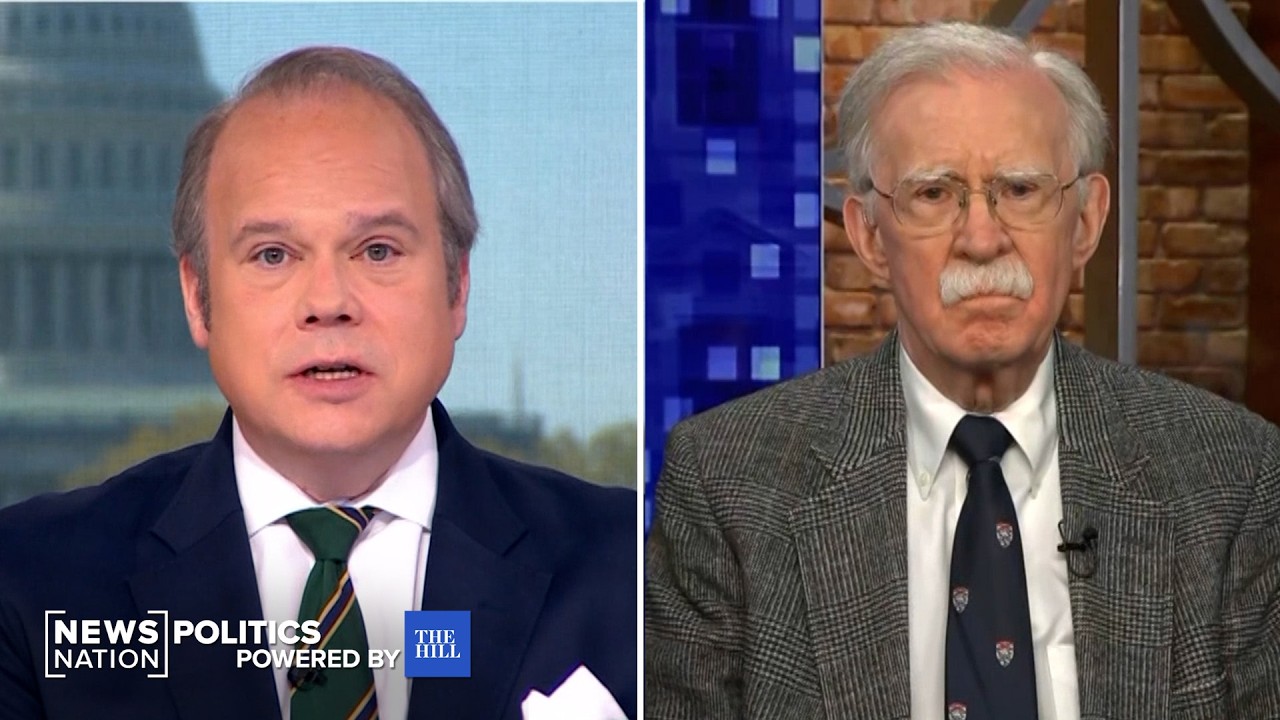
In a bombshell interview on The Hill Sunday, former National Security Advisor John Bolton delivers a searing critique of U.S.-Iran negotiations, warning that Iran is “following a radical ideology“ and will never relinquish its nuclear program. He slams past deals as flawed and urges immediate military action to blockade Iranian oil and reopen the Strait of Hormuz, amid fears of escalating conflict that could ignite a broader war.
Bolton’s remarks come as tensions soar between Washington and Tehran, with the U.S. facing stark choices: protracted diplomacy or renewed hostilities. He argues that a recent ceasefire was a critical error, allowing Iran time to regroup after weeks of intense pressure. “The Iranians are never going to negotiate that nuclear program away,“ Bolton asserts, echoing his long-standing distrust of Tehran’s intentions.
Highlighting the urgency, Bolton calls for a full-scale blockade on Iranian oil exports, aiming to cripple the regime’s economy and force internal fractures. He points to China’s role in arming Iran with anti-ship rockets and missiles, warning that Beijing and Russia have vested interests in Iran’s survival. This alliance, he says, threatens global stability and U.S. allies in the Gulf.
The former ambassador emphasizes that reopening the Strait of Hormuz is non-negotiable, as it would unleash a flood of Arab oil while starving Iran of revenue. “We need to increase the pressure on China and others propping up Tehran,“ Bolton states, underscoring how this strategy could lower worldwide gas prices and undermine Iran’s backers.
Critics within the U.S. intelligence community, like CIA assessments labeling regime change as “farcical,“ draw Bolton’s ire. He counters that such views are outdated, dating back to failures like Guatemala, and insists the Iranian people are ripe for uprising if given external support. “They’re disorganized and need help,“ he says, lamenting Trump’s missed opportunities.
Bolton’s vision extends to regime change as the ultimate goal, a move he believes would deliver a massive blow to Russia and China while bolstering U.S. interests. He recounts his unsuccessful efforts to persuade Trump during his first term, expressing surprise at recent escalations. “I was stunned when force was used,“ he admits, yet sees it as a necessary step.
As domestic opposition mounts in the U.S., with rising gas prices fueling political backlash, Bolton warns that Iran is banking on American fatigue. “They’re religious fanatics, not rational actors,“ he explains, predicting that sustained economic pressure could exploit existing regime divisions. Iran’s economy, already in ruins, has worsened amid the conflict.
The interview paints a vivid picture of a world on the brink, where Iran’s radical ideology drives unyielding defiance. Bolton’s call to action resonates as a wake-up call, urging policymakers to seize the moment before opportunities slip away. With global markets watching, the stakes have never been higher.
In detailing these strategies, Bolton draws on his extensive experience, from his tenure as U.N. ambassador under George W. Bush to his time in the Trump administration. He argues that preemptive aid to Iranian opposition groups could have altered the current dynamics, preventing the need for direct military confrontation.
The broader implications ripple across international alliances, as Gulf Arab states align with U.S. efforts to secure energy routes. Bolton’s blueprint for blockading Iranian oil not only targets Tehran’s finances but also signals to China and Russia that their support for Iran comes at a cost. Reports of new arms deals between Beijing and Tehran add fuel to this fire.
Experts are parsing Bolton’s words for clues on future U.S. policy, especially as the administration grapples with internal debates. His insistence on regime change as feasible challenges prevailing skepticism, framing it as a moral and strategic imperative. “The people of Iran are overwhelmingly against this regime,“ he declares, highlighting widespread discontent.
As the interview concludes, Bolton’s urgency is palpable, urging swift decisions to avert catastrophe. The global oil glut prior to the conflict, he notes, could be leveraged to Iran’s disadvantage, driving down prices and intensifying pressure. This fast-evolving scenario demands immediate attention from world leaders.
Bolton’s forthright stance underscores the fragility of the current truce, with Iran potentially using any pause to rebuild. He warns that backing down now would be a historic blunder, allowing Tehran to entrench its nuclear ambitions further. The path forward, he argues, lies in unrelenting economic and military leverage.
In this high-stakes chess game, the U.S. must navigate carefully, balancing risks with resolve. Bolton’s insights, drawn from years at the epicenter of global affairs, serve as a rallying cry for decisive action. The world waits with bated breath as these developments unfold.
Echoing through diplomatic circles, Bolton’s interview has sparked intense debate, with analysts dissecting his every word. His characterization of Iran as ideologically driven challenges conventional diplomacy, advocating for a harder line that could reshape Middle East dynamics. This breaking news story highlights the precarious balance of power.
As tensions simmer, the potential for miscalculation looms large, with any Iranian provocation risking a full-scale confrontation. Bolton’s call for regime change isn’t just rhetoric; it’s a strategic playbook aimed at dismantling what he sees as a threat to global security. The U.S. response in the coming days will be crucial.
Wrapping up his appearance, Bolton reiterates the need for unity among U.S. allies, emphasizing that isolating Iran economically is key to victory. His remarks on The Hill Sunday have already reverberated across headlines, forcing a reckoning on longstanding policies. In a world of rapid change, his words carry the weight of impending action.
This urgent narrative from a key figure in American foreign policy serves as a stark reminder of the dangers ahead. With Iran’s radical ideology at the core, the path to resolution demands unwavering resolve and international coordination. The story continues to develop, keeping the world on edge.