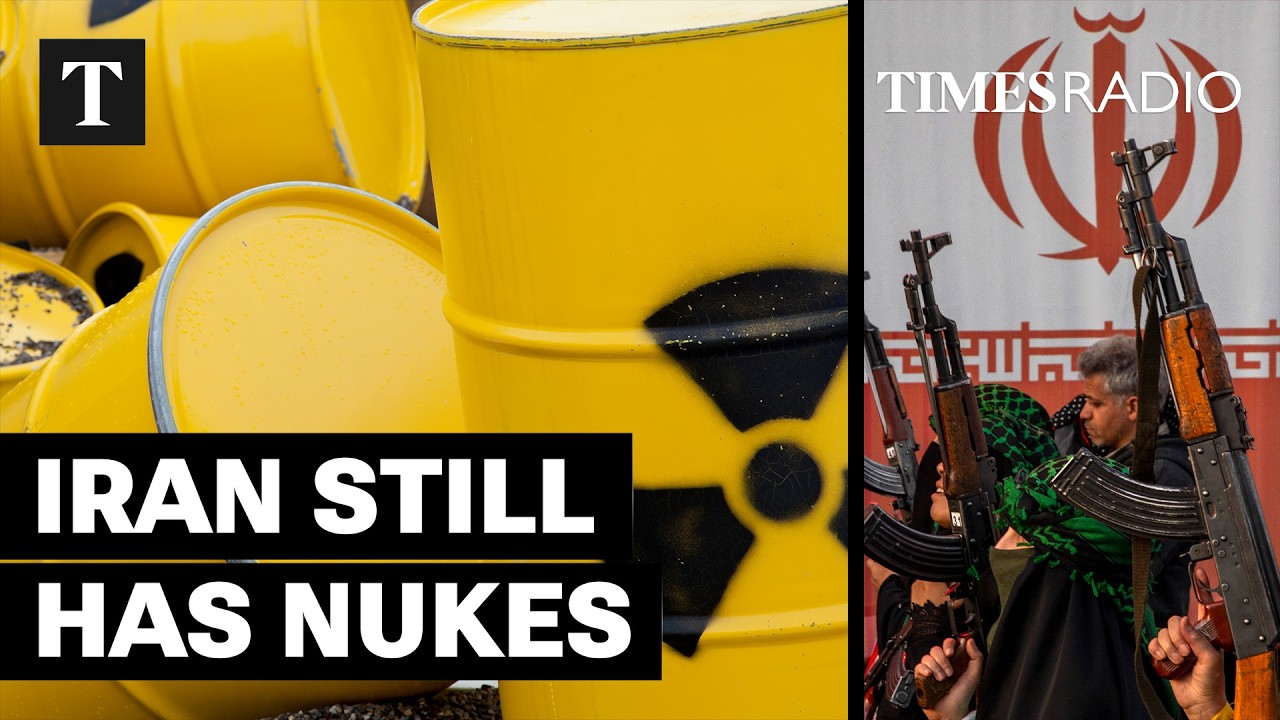
In a stunning revelation amid escalating Middle East tensions, a former US nuclear security expert has declared that Iran’s nuclear capabilities remain intact despite intense airstrikes. With Iran holding enriched uranium that could swiftly be weaponized, the prospects for a tougher deal than the 2015 agreement appear slim, heightening global fears of a potential arms race and regional instability.
This urgent warning comes from Frank Rose, who served as principal deputy administrator of the National Nuclear Security Administration under the Biden administration. Rose emphasized that while recent air attacks have degraded Iran’s program, they have not obliterated it, leaving a dangerous stockpile of about 400 kilograms of enriched uranium buried and out of reach. The core issue, he noted, is Iran’s insistence on retaining the right to enrich uranium, a demand that directly undermines any path to lasting peace.
Negotiations between the US and Iran are stalled, with the US pushing for the removal of all enriched materials as a non-negotiable condition. Rose, drawing from his expertise, argued that Iran’s obstinance stems from a strategic desire to maintain breakout capability for nuclear weapons, especially in the face of ongoing conflicts. This stance echoes the situation with North Korea, where nuclear arms have bolstered regime security, potentially emboldening Tehran amid current hostilities.
The broader context reveals a region on the brink, as Iran retaliates by blocking ships in the Strait of Hormuz, disrupting global trade routes. Meanwhile, the US has intercepted Iranian tankers near international waters, escalating a shadow war that could spiral into direct confrontation. Experts warn that this cycle of provocation risks drawing in other powers, further destabilizing an already volatile area.
Adding to the urgency, internal turmoil within the US Department of Defense has seen senior officials, including the Navy Secretary, abruptly resign. This wave of departures raises questions about America’s readiness to handle multiple crises, from nuclear standoffs to proxy battles in Lebanon and beyond. Rose highlighted that such instability is ill-timed, as diplomatic efforts falter and military posturing intensifies.
In Lebanon, accusations of war crimes against Israel have compounded the chaos, following the death of a journalist in an airstrike targeting Hezbollah-linked vehicles. The Israel Defense Forces maintain they do not target journalists, but the incident underscores the human cost of these conflicts. Foreign correspondents on the ground describe a deepening divide, with peace talks between Israel and Lebanon struggling amid mutual distrust and hardening positions.
Back to Iran, the expert’s assessment paints a grim picture: any deal better than the 2015 Joint Comprehensive Plan of Action seems improbable. Iran views enrichment as an existential right, tied to its civilian nuclear ambitions, even if it masks deeper military intentions. This unyielding posture, Rose suggested, is reinforced by recent events, making concessions unlikely and increasing the risk of escalation.
As the world watches, the implications are profound. A failure to secure a robust agreement could lead to Iran accelerating its program, potentially triggering a nuclear arms race in the Middle East. With US-Iran relations at a low point, President Trump’s hardline approach—demanding a “far better“ deal—faces significant hurdles, as outlined in Rose’s frank analysis.
The transcript of Rose’s interview reveals a nuanced but alarming reality: Iran’s capabilities, though damaged, are far from defeated. This development comes at a critical juncture, with international observers urging swift action to prevent a catastrophe. The non-proliferation treaty, which allows civilian programs but not enrichment for weapons, is being tested as never before.
Experts like Rose point to historical parallels, noting that regimes under threat often double down on nuclear pursuits. In Iran’s case, the recent airstrikes may have only solidified their resolve, complicating efforts by the US and its allies to enforce safeguards. This situation demands immediate global attention, as the window for diplomacy narrows.
Meanwhile, the blockade of shipping lanes by Iran signals a willingness to weaponize economic pressure, potentially driving oil prices skyward and impacting economies worldwide. US responses, including naval deployments, add to the tension, creating a powder keg that could ignite with little warning. Stakeholders must navigate this carefully to avoid broader conflict.
Rose’s insights, delivered with a sense of urgency, underscore the fragility of the current status quo. As negotiations drag on without resolution, the risk of miscalculation grows, with Iran’s nuclear shadow looming larger. This is not just a regional issue; it’s a global threat that could reshape international security for years to come.
In the midst of this, the US faces its own challenges, with leadership changes in the Defense Department signaling potential vulnerabilities. Critics argue that such instability hampers effective policy-making, especially when dealing with adversaries like Iran. Yet, amid the uncertainty, one thing is clear: the need for decisive action has never been greater.
Turning to the human element, the loss of journalists in conflict zones highlights the perils of reporting in war-torn areas. In Lebanon, the accusation of war crimes against Israel adds another layer of complexity to peace efforts, as public outrage mounts and diplomatic channels strain. This incident serves as a stark reminder of the real-world consequences of geopolitical maneuvering.
As talks between Israel and Hezbollah inch forward, the overarching narrative remains one of caution. Iran’s nuclear ambitions, intertwined with these regional disputes, create a web of interconnected threats that demand coordinated international response. Rose’s warning serves as a call to arms for diplomats and leaders alike.
The path ahead is fraught with obstacles, but ignoring the issue is not an option. With Iran’s capabilities intact, the world must confront this head-on, seeking creative solutions to avert disaster. This breaking news story, drawn from expert testimony, underscores the high stakes at play in the shadows of global power struggles.
In summary, the expert’s declaration that Iran’s nuclear threat persists is a wake-up call, urging immediate engagement to prevent escalation. As tensions simmer and alliances shift, the international community hangs in the balance, awaiting the next move in this high-stakes 𝒹𝓇𝒶𝓂𝒶.